
Twiq - Anonymous Chat
Voletius LtdCommunication
3.6408.00 Reviews
- Version
- 12.0.1
- Installs
- 500.00K
- Age Rating
- Mature 17+
Screenshots
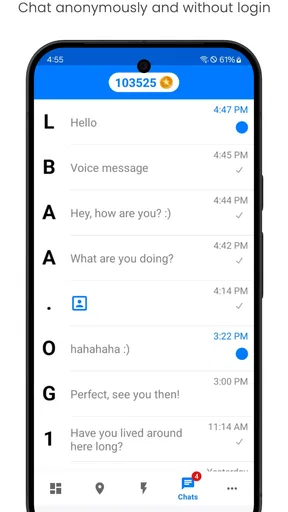
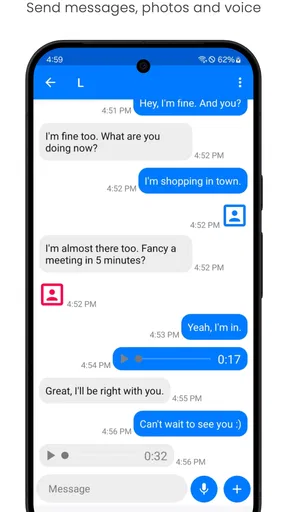
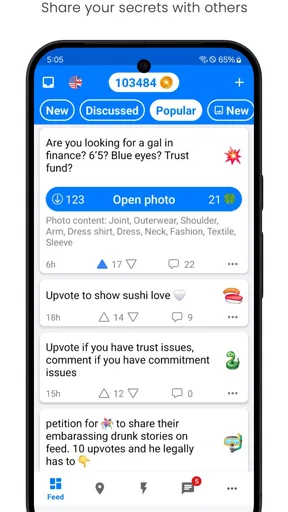
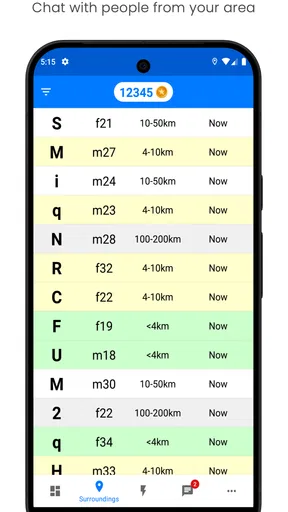
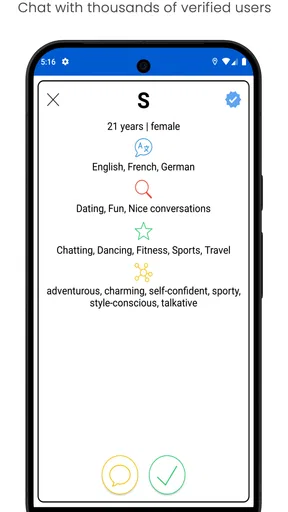
Our Review of Twiq - Anonymous Chat
 Analysis by Appyee
I approached Twiq - Anonymous Chat as a communication app for people who want to meet strangers, make friends internationally, and move into private conversations quickly. My first impression was that its appeal is easy to understand: it removes much of the formality of traditional social networks and puts the conversation itself at the center. That can feel refreshing when I want a casual exchange rather than another carefully edited profile.
At the same time, anonymous conversation changes the responsibility on the user. The app is rated for mature audiences, and that matters here because open contact with unknown people can bring uncomfortable, adult, or misleading interactions. I would recommend using it with clear personal boundaries, especially if the goal is friendship rather than flirting or short-lived small talk.
How Twiq feels to use in everyday communication
Voletius Ltd presents Twiq as a free communication app, and the basic idea is straightforward: meet people worldwide and begin chatting privately. It is available for Android users running version 9 or later, with the current release listed as 12.0.1. The service has passed half a million installs, so it is not an obscure experiment, although its average rating of 3.6 from roughly 6,800 ratings suggests that the experience is mixed rather than universally smooth.
I find that rating useful context. Twiq can be enjoyable when I enter with realistic expectations, but it is not a replacement for a carefully moderated messaging service, a professional networking platform, or a messaging app built for people I already know. Its strength is spontaneous contact. Its weakness is that spontaneity also makes the quality and tone of conversations unpredictable.
Readability and navigation during the first session
The app’s concept is easier to understand than many social platforms because the purpose is narrow: discover people and chat. I do not need to learn a large collection of publishing tools, public timelines, or complicated profile sections before starting. That simplicity is helpful for anyone who finds feature-heavy social apps tiring or visually cluttered.
For a new user, I would suggest taking a slow first pass through the interface instead of immediately replying to every invitation. The important question is not only where the chat control is, but also how to return to previous conversations, distinguish a genuine interaction from a random approach, and locate the controls for ending contact. Learning those paths early makes the app feel less stressful later.
Readable communication depends heavily on the other person. Short messages are usually easier to scan than long paragraphs, but anonymous chat can also produce slang, abbreviations, and abrupt topic changes. Someone with dyslexia, limited language confidence, or attention difficulties may find the conversational style more demanding than the interface itself. I would use the phone’s normal text-size and display settings where available, then keep conversations focused rather than trying to follow several at once.
One practical workflow works particularly well for me: I treat the first exchange as a screening conversation, not as an instant friendship. I ask a neutral question, watch whether the reply respects the topic, and avoid moving to another service until the interaction has earned more trust. This reduces the pressure to make a quick decision based only on a friendly opening line.
Motor and sensory considerations
Chatting is generally less physically demanding than apps built around constant swiping, rapid games, or frequent image editing. That makes Twiq potentially comfortable for users who prefer simple text interaction or who need to take breaks between actions. I can answer at my own pace rather than feeling that every second matters.
Still, anonymous messaging has its own motor challenges. Repeated typing can be tiring for people with limited hand movement, tremors, or pain. A useful approach is to use the device’s built-in voice typing for longer replies, edit the result carefully, and keep messages concise. This is not a special Twiq feature; it is a phone-level workaround that can make ordinary chat more manageable.
Notifications can also affect sensory comfort. Unexpected alerts may be distracting or unpleasant for people sensitive to sound, vibration, or interruptions. I would configure the phone’s notification behavior before starting regular conversations, particularly if I use the app during work, study, rest, or caregiving. The best experience is not necessarily the one with the most immediate replies; it is the one that lets me choose when I am available.
Users who depend on screen readers or other assistive technology should judge the app in their own setup, because practical accessibility can vary with the device, operating-system version, and interface changes. I would not assume that a clean-looking chat screen automatically means every label, button, and state is equally understandable through assistive tools. A short trial is sensible before investing time or making in-app purchases.
Using Twiq in different situations
The app makes the most sense when I have a specific social purpose. For example, if I have moved to a new city and want low-pressure conversation with people from different backgrounds, Twiq can provide an easy starting point. I might chat during a commute, compare everyday routines with someone abroad, or practice informal English without the commitment of joining a public group.
That same flexibility can become a problem in shared or sensitive environments. I would avoid opening private conversations where another person can easily read the screen, such as a crowded workplace or a public transport seat. Anonymous chat often contains personal details sooner than expected, and a visible message preview can expose more than I intended.
For someone with limited data, an older phone, or an unreliable connection, text-first communication may be more practical than media-heavy social platforms. However, I would still monitor battery use and connectivity in the actual conditions where I plan to use it. A service that feels fine on home Wi-Fi may be less convenient during travel or in areas with weak reception.
There is also a useful social distinction between Twiq and familiar alternatives. A standard messenger is usually valuable because my contacts are already known. A mainstream social network gives me public identity, visible communities, and more context before I reply. A dating app often supplies clearer matching intentions. Twiq sits in a less predictable middle ground: it is better for spontaneous discovery than a contact list, but it gives me less reliable context than a profile-based service.
Privacy habits that make anonymous chat safer
The word “anonymous” should not be treated as a guarantee that every conversation is consequence-free. I would avoid sharing my full name, home address, workplace, school, daily route, financial information, or private photographs with a new contact. Even harmless details can become identifying when combined.
I also recommend separating friendliness from trust. A person who replies quickly is not automatically reliable, and someone who asks to move off the app immediately may be trying to avoid the limited safeguards available inside the original conversation. I prefer to keep the early discussion general and end it as soon as the tone becomes manipulative, sexual, threatening, or simply uncomfortable.
Another overlooked habit is keeping a record of why I accepted a conversation. If I am bored, lonely, or upset, I may overlook warning signs that would be obvious at another time. Using Twiq as a short, intentional social break works better for me than opening it whenever I need emotional reassurance. The latter can make disappointing conversations feel more personal than they should.
Where the experience still creates barriers
The biggest barrier is uncertainty. A new contact can be interesting, but I cannot assume that the person’s age, identity, intentions, or location are exactly as presented. That uncertainty is especially important because the app carries a mature 17+ content rating. I would not recommend it to younger users, and adults should be prepared for conversations that may not match their expectations.
Another limitation is the uneven quality of social discovery. Some chats may fade after a few messages, while others may become repetitive or overly direct. Users looking for structured communities, topic-based discussion, or dependable long-term contacts may be happier with a moderated forum, an interest group, or a conventional messenger used with people they already know.
The free entry point is helpful, but optional spending deserves attention. In-app purchases range from $1.99 to $63.99 per item, so I would not buy anything during the first session. I would first decide whether the free experience suits my communication style, then check what a purchase actually changes and whether it solves a problem I genuinely have. Paying does not remove the social risks of talking with strangers.
People with different abilities may also encounter barriers that are not obvious from the app’s main purpose. Long conversations can be hard for users with cognitive fatigue, rapid incoming messages can be difficult for users who need more processing time, and unclear social cues can affect autistic users or anyone who prefers explicit communication. I find it helpful to state boundaries plainly, mute the phone when necessary, and leave conversations without feeling obligated to explain.
Who should try it, and who should choose something else?
I think Twiq is worth trying if I want casual international conversation, enjoy meeting people outside my existing circle, and can handle unpredictable replies without taking them personally. It may also suit someone who dislikes building a polished public profile and prefers to judge a connection through direct conversation.
I would choose another option if my priority is dependable identity verification, professional networking, family communication, or a tightly moderated environment. A regular messenger is better for known contacts. A community platform is better when shared interests should guide discovery. A dating service is more appropriate when romantic intentions need to be clearer from the start.
I would also skip Twiq if I am currently looking for guaranteed emotional support. A stranger may be kind, but the app is not a substitute for a trusted friend or qualified help. The freedom of anonymous contact is useful for light conversation; it is less suitable when I need continuity, accountability, or a predictable response.
My inclusive verdict after using it
Twiq has a clear place in the communication category: it lowers the effort needed to start a conversation with someone new, and its worldwide focus gives ordinary chats a sense of discovery. I appreciate that the basic service is free and that the experience can remain simple for users who prefer direct text over elaborate social feeds.
Its inclusiveness is more situational than comprehensive. People can adapt the experience through device settings, voice typing, notification controls, and deliberate pacing, but those adjustments do not remove the uncertainty of anonymous contact. Accessibility is therefore tied not only to buttons and text, but also to emotional load, privacy, sensory interruptions, and the ability to exit uncomfortable exchanges quickly.
After seeing both sides, I would recommend using Twiq as a controlled social experiment, not as an automatic trust network. Start with short conversations, protect identifying details, set notification limits, and spend nothing until the app has proved useful in your own routine. With those boundaries, it can be a pleasant way to meet unfamiliar voices. Without them, the same openness that makes Twiq interesting can make it tiring or unsafe.
The developer, Voletius Ltd, has built an app with a focused idea rather than an all-purpose social ecosystem. That focus is its main advantage, while the lack of certainty around new contacts is its defining trade-off. For me, the final decision is simple: I would keep it for occasional, low-pressure conversations, but I would not replace my established communication tools with it.
Verdict
Strengths of Twiq - Anonymous Chat
- Anonymous conversations make it easier to share thoughts openly.
- Simple interface helps users start chatting with little setup.
- Useful for meeting people beyond your existing social circle.
- Topic-based chats can make finding shared interests easier.
- Quick messaging keeps conversations casual and spontaneous.
Limitations of Twiq - Anonymous Chat
- Anonymity can encourage rude, offensive, or inappropriate behavior.
- You may encounter inactive users or conversations that end abruptly.
- Limited identity verification makes it harder to judge who to trust.
- Some chats may feel repetitive or lack meaningful interaction.
- Privacy risks remain if you share personal details with strangers.
Similar Picks in This Category
View All
Google Messages
Google LLC4.6

Gmail
Google LLC4.1

Google Meet
Google LLC4.4

Google Chrome
Google LLC4.1

WhatsApp Messenger
WhatsApp LLC4.6

Carrier Services
Google LLC4.2
Frequently Asked Questions
What is Twiq - Anonymous Chat, and how does it work?
Twiq - Anonymous Chat is designed for meeting and talking with other people without immediately revealing your real identity. After creating a profile or entering the service, you can browse available conversations, send messages, and interact with users through the app. The anonymous format can make starting conversations easier, but the experience depends on the number of active users in your area and how carefully you configure your privacy settings.
Is Twiq - Anonymous Chat really completely anonymous?
The app may let you hide personal details from other users, but “anonymous” should not be understood as total invisibility. Information connected with your account, device, messages, or activity may still be processed by the service according to its privacy policy. Avoid sharing your full name, address, phone number, passwords, workplace, financial information, or private photos until you genuinely trust someone and understand how the platform handles data.
Is Twiq - Anonymous Chat safe for teenagers and younger users?
Before downloading Twiq, check its current age rating, terms of service, and safety guidance in your country. Anonymous social apps can expose users to strangers, inappropriate messages, harassment, scams, or attempts to move conversations to less protected platforms. Parents should discuss online boundaries with younger users, review available blocking and reporting tools, and avoid allowing children to use the app without appropriate supervision.
Can users block or report inappropriate people on Twiq?
A social chat application should provide ways to block, mute, or report users who send abusive, threatening, sexual, fraudulent, or otherwise unwanted content. During testing, it is important to look for these controls directly in a profile, conversation, or settings menu because their location can change between versions. Save evidence when appropriate, stop replying to suspicious accounts, and contact official support if a serious safety issue occurs.
Does Twiq - Anonymous Chat cost money, and are there in-app purchases?
Twiq may be available to download without an upfront charge, but free access does not necessarily mean every feature is free. Anonymous chat services can use advertisements, premium memberships, subscriptions, virtual items, or paid options that improve visibility or unlock additional interactions. Review the Google Play or App Store listing and the purchase screen carefully before confirming payment, especially if subscriptions renew automatically.
